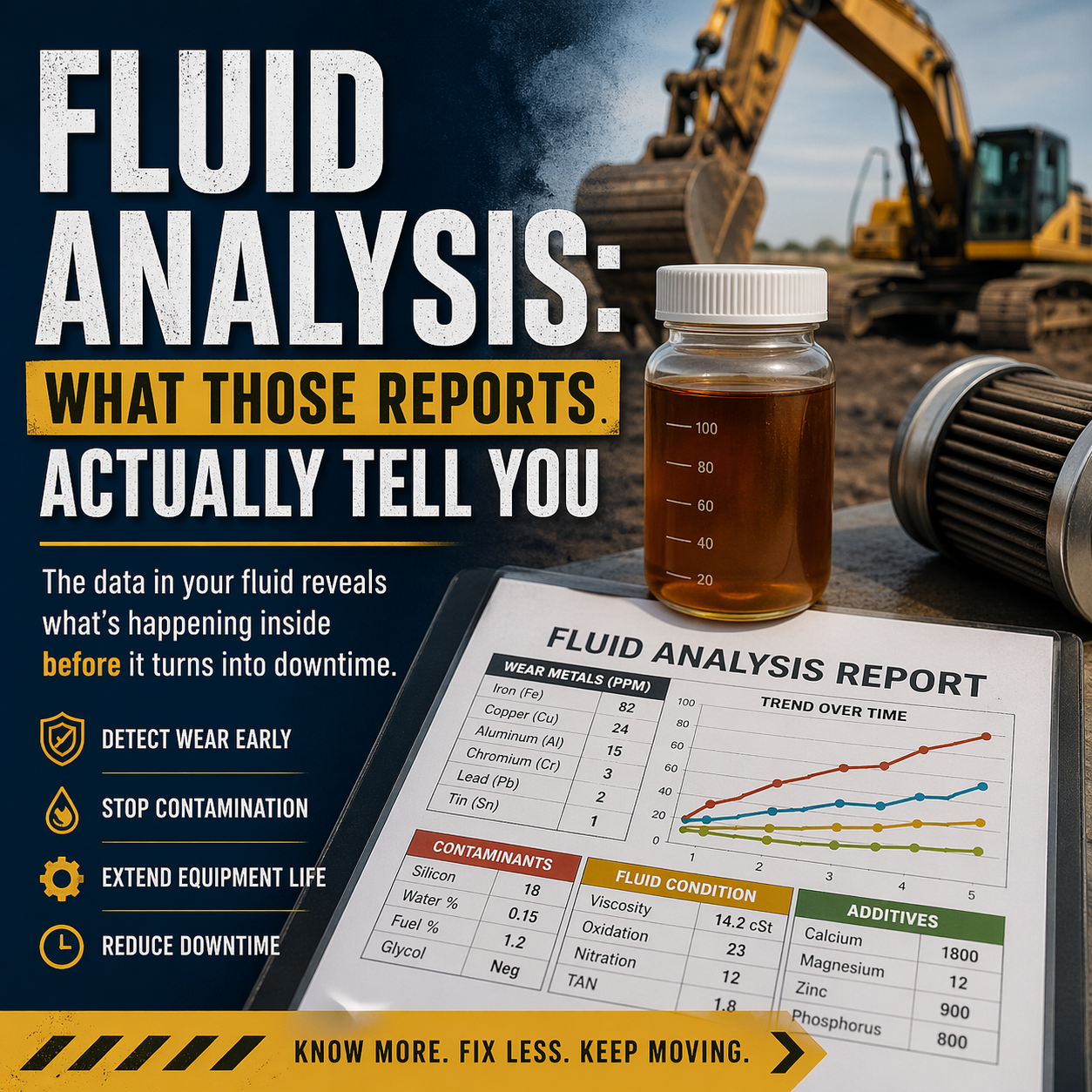
Fluid Analysis: What Reports Really Tell You
Iron Insights
Fluid Analysis: What Those Reports Actually Tell You
Fluid analysis is one of the most underrated tools in heavy equipment maintenance. It doesn’t look impressive at first glance—just a page of numbers, charts, and technical terms—but those reports can quietly tell you more about your machine’s health than a visual inspection ever will.
The challenge is knowing what you’re actually looking at.
Let’s break down what fluid analysis reports are really saying, and why they matter more than most operators and owners realize.
What Fluid Analysis Actually Is
Fluid analysis is a lab-based diagnostic test performed on samples of oil, coolant, hydraulic fluid, or transmission fluid taken from your equipment. The lab checks for:
- Wear metals (iron, copper, aluminum, etc.)
- Contaminants (dirt, fuel, water, coolant)
- Fluid degradation (oxidation, viscosity breakdown)
- Additive levels (what’s left of the protective chemistry)
Think of it as a blood test for your machine. It doesn’t just say “good” or “bad”—it shows trends that reveal what’s happening inside the engine or system long before a failure occurs.
Wear Metals: The Early Warning System
One of the most important sections of a report is wear metal content.
Different metals point to different internal components:
- Iron → cylinders, gears, shafts
- Copper → bearings, bushings, oil coolers
- Aluminum → pistons, housings
- Chromium → piston rings or hardened surfaces
A single high number might not mean much. What matters is the trend over time.
If iron levels slowly increase across multiple samples, that’s often a sign of accelerated internal wear—long before you’d ever notice performance issues.
Contaminants: The Silent Destroyers
Contaminants are where a lot of expensive damage starts.
Common ones include:
- Dirt/silica: usually from poor filtration or air intake leaks
- Fuel dilution: indicates injector issues or incomplete combustion
- Water: can lead to corrosion and oil breakdown
- Coolant: often signals gasket or heat exchanger failure
Even small amounts of contamination can dramatically shorten component life. A fluid report can catch these issues early—before they turn into major repairs.
Viscosity and Fluid Breakdown
Viscosity tells you how well the fluid is still doing its job.
If oil becomes too thin, it can’t protect metal surfaces properly. If it becomes too thick, it can restrict flow and reduce efficiency.
Reports will often flag:
- Shearing (oil thinning under stress)
- Oxidation (oil aging and thickening)
- Thermal breakdown (heat damage)
This is especially important in high-load equipment where oil is constantly under pressure.
Additives: What’s Left in the Tank
Engine and hydraulic oils come with additive packages designed to protect against wear, corrosion, and sludge.
Over time, those additives get used up.
A fluid analysis report will show:
- Detergent depletion
- Anti-wear additive loss
- Acid neutralization capacity dropping
When additive levels fall too low, even clean-looking oil can stop protecting your equipment properly.
Trending Data Matters More Than One Report
One of the biggest mistakes people make is treating a single report as a final answer.
Fluid analysis is about trends.
A single “high” reading might be nothing. But a steady climb over three or four samples is a pattern—and patterns are where real diagnostics happen.
Good maintenance programs rely on consistent sampling intervals so you can see change over time.
What a “Bad Report” Actually Means
A bad report doesn’t always mean immediate failure is coming. It usually means:
- Something is wearing faster than expected
- A system is leaking or contaminated
- Maintenance intervals may be too long
- A small issue is developing into a larger one
The real value is time. Fluid analysis often gives you weeks or months of warning before a breakdown occurs.
How to Use Fluid Analysis Effectively
To get real value from fluid analysis:
- Sample consistently (same interval, same conditions)
- Track results over time, not in isolation
- Pair reports with machine hours and workload conditions
- Act early on trends, not just red flags
The goal isn’t to “pass” a test—it’s to understand what your equipment is telling you before it becomes a repair bill.
Fluid analysis isn’t just paperwork—it’s predictive maintenance in its most practical form. It turns invisible wear into visible data and gives you the chance to act before downtime hits.
Most equipment doesn’t fail suddenly. It fails quietly, over time, in the fluid long before it stops working on the jobsite.
If you know how to read the report, you’re not reacting to breakdowns anymore—you’re preventing them.