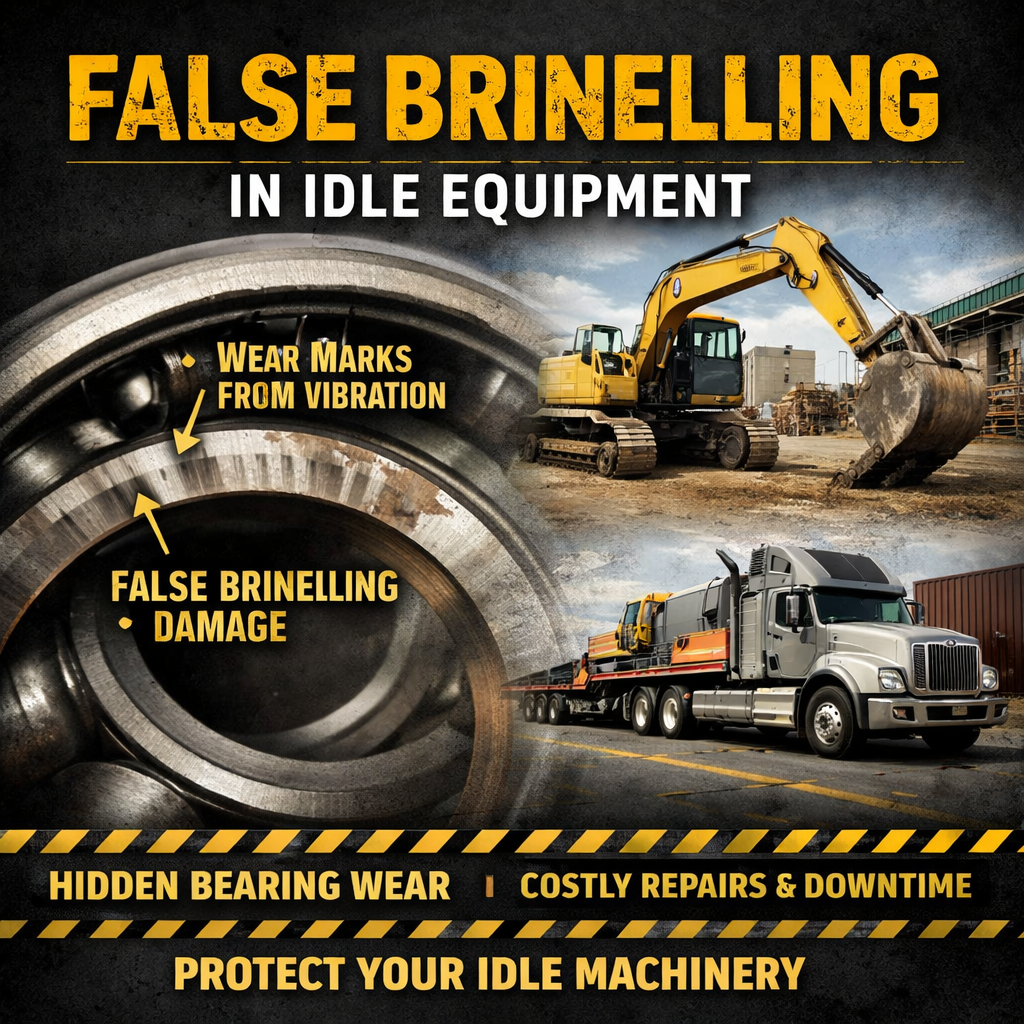
False Brinelling in Idle Equipment: The Hidden Damage You’re Not Seeing
Heavy equipment is built to work. But what happens when it doesn’t?
Ironically, some of the most expensive damage to your machines can occur when they’re sitting still. One of the most overlooked issues is false brinelling—a subtle but destructive form of wear that can quietly ruin bearings long before the machine is put back into service.
If you store equipment seasonally, rotate fleet usage, or keep backup units on standby, understanding false brinelling is critical.
What Is False Brinelling?
False brinelling is a type of wear that occurs in rolling element bearings (like ball or roller bearings) when there is small, repeated movement without full rotation.
Instead of smooth rolling motion, the bearing experiences tiny vibrations or oscillations. This causes the rolling elements to rub against the same spot on the raceway over and over, eventually creating:
- Shallow grooves or indentations
- Polished or worn patches
- Premature bearing failure
Despite the name, false brinelling is not true brinelling (which is caused by heavy impact loads). It’s a wear problem driven by vibration and micro-movement.
Why Idle Equipment Is at Risk
False brinelling most often shows up in machines that are not being used regularly.
When equipment sits idle, several conditions come into play:
Environmental Vibrations
Even when parked, equipment can experience vibration from:
- Nearby traffic or railways
- Other operating machines
- Wind (especially on large components like booms)
Transportation Effects
Hauling equipment on trailers is a major contributor to false brinelling. Constant road vibration can damage bearings in:
- Wheel hubs
- Slew rings
- Electric motors
Lack of Lubrication Movement
When equipment runs, lubrication is distributed evenly. When it sits:
- Grease settles
- Oil drains away from contact points
- Protective films break down
This leaves bearings more vulnerable to micro-wear.
Where False Brinelling Happens Most
False brinelling can affect any bearing, but it’s most common in:
- Electric motors (especially standby or backup units)
- Pumps and compressors
- Slewing rings on excavators and cranes
- Wheel bearings on stored or transported equipment
- Gearboxes in idle machinery
These components often sit under load without movement—creating the perfect conditions for damage.
How to Spot False Brinelling
The tricky part about false brinelling is that you often don’t notice it until it’s too late.
Here are early warning signs:
- Unusual noise when restarting equipment
- Increased vibration during operation
- Reduced bearing life after storage
- Visible wear patterns during inspection (evenly spaced marks matching rolling elements)
In advanced cases, bearings may fail shortly after being put back into service—leading to unexpected downtime.
The Cost of Ignoring False Brinelling
False brinelling might seem minor, but the consequences can be expensive:
- Premature bearing replacement
- Unplanned downtime
- Secondary damage to shafts or housings
- Reduced equipment reliability
For high-value machines, this can mean thousands—or tens of thousands—of dollars in avoidable repairs.
How to Prevent False Brinelling
The good news: false brinelling is highly preventable with the right practices.
Rotate Equipment Regularly
Move or rotate shafts periodically to redistribute load and lubrication:
- Even a partial rotation helps
- Schedule this for long-term storage units
Use Proper Storage Techniques
- Store equipment on stable, vibration-free ground
- Isolate from heavy traffic areas when possible
Secure During Transport
- Use proper tie-down techniques
- Consider vibration-dampening supports for sensitive components
Maintain Lubrication
- Reapply grease before and during storage
- Use lubricants designed for long-term protection
Relieve Load Where Possible
If feasible:
- Lift components slightly off bearings
- Redistribute static loads
Run Equipment Periodically
Starting and operating machinery—even briefly—helps:
- Circulate lubrication
- Prevent localized wear
- Keep seals and components in good condition
False Brinelling vs True Brinelling
It’s important not to confuse the two:
| Type | Cause | Appearance |
| False Brinelling |
Vibration & micro-movement
|
Polished wear marks |
|
True Brinelling
|
Heavy impact or overload | Deep, permanent indentations |
Understanding the difference helps ensure proper diagnosis and prevention.
False brinelling is one of those problems that hides in plain sight—quietly developing while your equipment sits idle. By the time you notice it, the damage is often already done.
But with simple preventive steps like rotating components, maintaining lubrication, and minimizing vibration exposure, you can protect your fleet and avoid costly surprises.
If your equipment isn’t working, that doesn’t mean it isn’t wearing out.