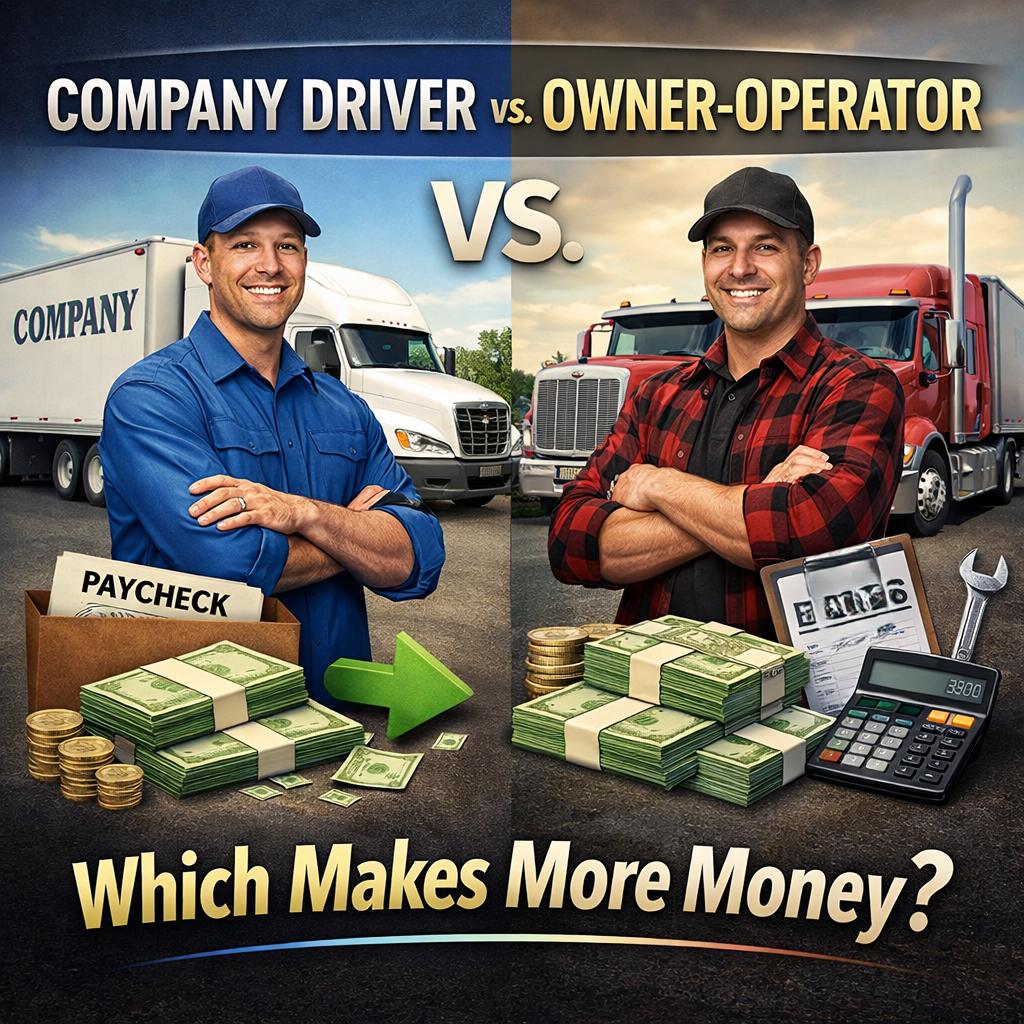
Company Driver vs. Owner-Operator: Which Makes More Money?
For many truck drivers, the question eventually comes up: Can I make more money as a company driver or as an owner-operator? The answer isn’t as simple as it might seem. While owner-operators often have higher earning potential, they also carry significantly higher costs and risks. In many cases, the difference in actual take-home income can be smaller than people expect.
Let’s break down how the two roles compare.
Company Drivers: Predictable Income and Lower Risk
Company drivers work for a trucking company and operate equipment owned by the employer. They are typically paid by the mile, by the hour, or sometimes by salary depending on the job.
The biggest advantage of being a company driver is predictability. The company covers major expenses like the truck payment, fuel, maintenance, insurance, and permits. Drivers simply focus on completing loads safely and efficiently.
Typical benefits of company driving include:
- Consistent paychecks
- Health benefits and retirement plans (in many companies)
- Paid time off
- No responsibility for major equipment costs
- Less financial risk
Company drivers may earn anywhere from $60,000 to $90,000 per year, depending on experience, route type, and region. Specialized hauling or long-haul routes can sometimes push that number higher.
The tradeoff is that company drivers have limited control over their rates, schedules, and routes. Their income ceiling is largely determined by the company.
Owner-Operators: Higher Revenue, Higher Expenses
Owner-operators own or lease their truck and run their operation as an independent business. Instead of earning a wage, they are paid per load or per mile under a contract with a carrier or through their own customers.
Gross revenue for owner-operators can look impressive. Many independent drivers generate $150,000 to $300,000 or more in annual revenue depending on freight type and miles driven.
However, that revenue must cover all operating expenses, including:
- Truck payments or lease costs
- Fuel
- Maintenance and repairs
- Insurance
- Permits and licensing
- Tires
- Tolls and scales
- Accounting and business costs
- Downtime when the truck isn’t moving
After expenses, many owner-operators net somewhere between $70,000 and $120,000 per year, though this can vary widely depending on market conditions, freight rates, and how efficiently the business is run.
In strong freight markets, owner-operators can significantly outperform company drivers. In weak markets, however, profits can shrink quickly.
The Real Difference: Risk vs. Control
The biggest difference between the two roles isn’t just money—it’s risk and control.
Company drivers trade some earning potential for stability. They don’t have to worry about unexpected engine failures, rising diesel prices, or finding the next load.
Owner-operators, on the other hand, have full control over their business. They can choose freight, negotiate rates, and decide how much they want to work. But they also carry the financial responsibility when something goes wrong.
For example, a single major engine repair can cost $25,000 or more, which can quickly wipe out several months of profit.
So Which One Makes More Money?
In many cases:
Company drivers make less gross income but enjoy more stability.
Owner-operators can earn more, but only if they manage expenses and downtime effectively.
The difference in net income isn’t always dramatic. Some experienced company drivers earn as much as lower-performing owner-operators without the financial stress of running a business.
The Bottom Line
Becoming an owner-operator can be financially rewarding, but it’s best viewed as starting a trucking business, not simply upgrading a driving job.
Drivers who succeed as owner-operators tend to understand costs, plan for maintenance, manage cash flow, and operate efficiently. Those who prefer steady pay and less financial risk may find that company driving offers a better balance of income and lifestyle.
In the end, the better option depends on your tolerance for risk, your business skills, and how much control you want over your career on the road. 🚛💰