Break-In Myths: First 100 Hours That Matter
Iron Insights
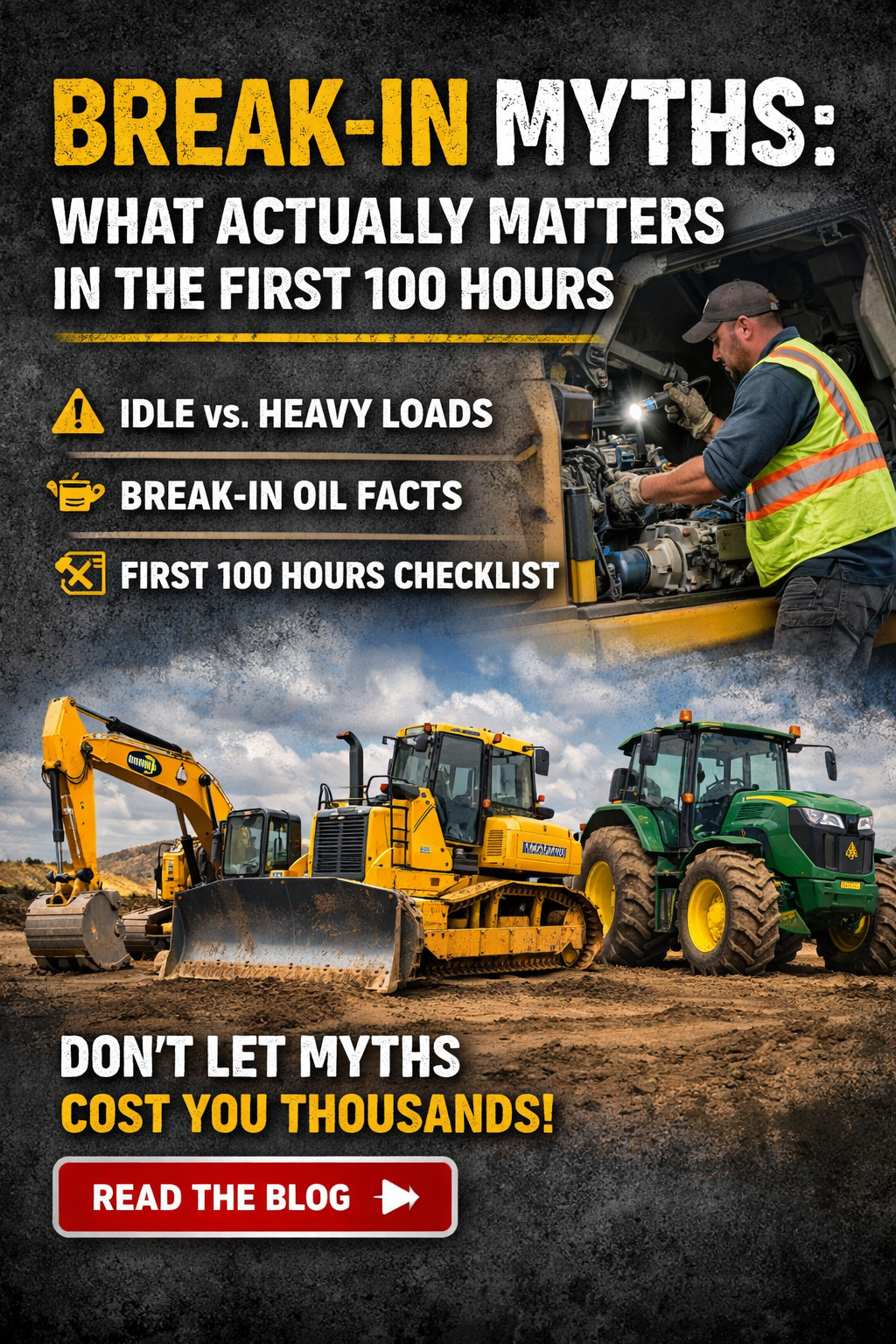
Break-In Myths: What Actually Matters in the First 100 Hours
The first 100 hours on a new (or freshly rebuilt) machine can set the tone for thousands of productive hours — or years of preventable repairs.
Yet job sites are still full of “break-in” advice that ranges from outdated… to flat-out wrong.
Let’s separate myth from reality and focus on what actually matters during those critical first 100 hours.
Myth #1: “Just Let It Idle to Break It In”
Extended idling does not properly break in modern diesel engines.
Most major manufacturers — including Caterpillar Inc., Komatsu Ltd., and John Deere — design engines to break in under moderate load, not idle time.
What actually matters:
- Vary engine speed and load during early operation
- Avoid long idle periods
- Bring the engine up to operating temperature regularly
- Avoid lugging (full throttle at low RPM)
Proper cylinder seating happens under pressure — not while parked and humming.
Myth #2: “Run It Hard Right Away”
On the flip side, some operators believe you should “work it like you stole it” from hour one.
That’s just as risky.
During the first 100 hours:
- Bearings are seating
- Gear surfaces are mating
- Hydraulic components are polishing contact points
- Seals are conforming
Excessive loads before surfaces properly mate can create microscopic damage that shortens component life.
What actually matters:
- Gradually increase load over the first 25–50 hours
- Avoid extreme shock loads
- Watch temperatures closely
- Listen for abnormal noise or vibration
Controlled stress is good. Abuse is not.
Myth #3: “Factory Oil Is Just Regular Oil”
Break-in oil isn’t magic — but it is intentional.
Some manufacturers use specially formulated oil that allows proper ring seating before switching to full-spec oil. Draining it too early — or extending it too long — can both cause issues.
What actually matters:
- Follow the manufacturer’s first service interval exactly
- Change filters at recommended hours
- Inspect drained oil for debris
- Send an oil sample if possible
That first oil change tells you a lot about what’s happening internally.
Myth #4: “If It’s New, It Doesn’t Need Inspection”
Brand new machines loosen up.
Hose clamps settle.
Bolts stretch slightly.
Tracks tension changes.
Electrical connections seat.
Skipping early inspections is a common and expensive mistake.
What actually matters in the first 100 hours:
- Re-torque wheel lugs and critical fasteners
- Check track tension (especially on excavators and dozers)
- Inspect hydraulic fittings for weeps
- Monitor coolant and DEF levels
- Check air filters for early restriction in dusty conditions
Those small adjustments prevent big downtime later.
Myth #5: “Modern Machines Don’t Need Break-In”
Yes, machining tolerances are better than ever.
But physics hasn’t changed.
Metal still expands with heat.
Friction still creates wear patterns.
Seals still conform under pressure.
Whether it’s a compact skid steer or a 50-ton excavator, the first 100 hours still shape the machine’s long-term health.
What Actually Makes the Biggest Difference
If you remember nothing else, focus on this:
1. Vary the Load
Avoid constant RPM and repetitive low-load operation.
2. Avoid Extremes
No extended idling. No heavy shock loading.
3. Watch the Machine
Temperatures, noises, vibration, leaks — pay attention early.
4. Perform the First Service On Time
Not late. Not early. On time.
5. Document Everything
Hours, inspections, oil samples — especially if warranty matters.
The Bottom Line
The first 100 hours aren’t about babying the machine.
They’re about controlled conditioning.
Operate it smart.
Load it progressively.
Inspect it thoroughly.
Service it on schedule.
Do that — and you’re not just breaking it in.
You’re setting it up for thousands of reliable hours ahead.