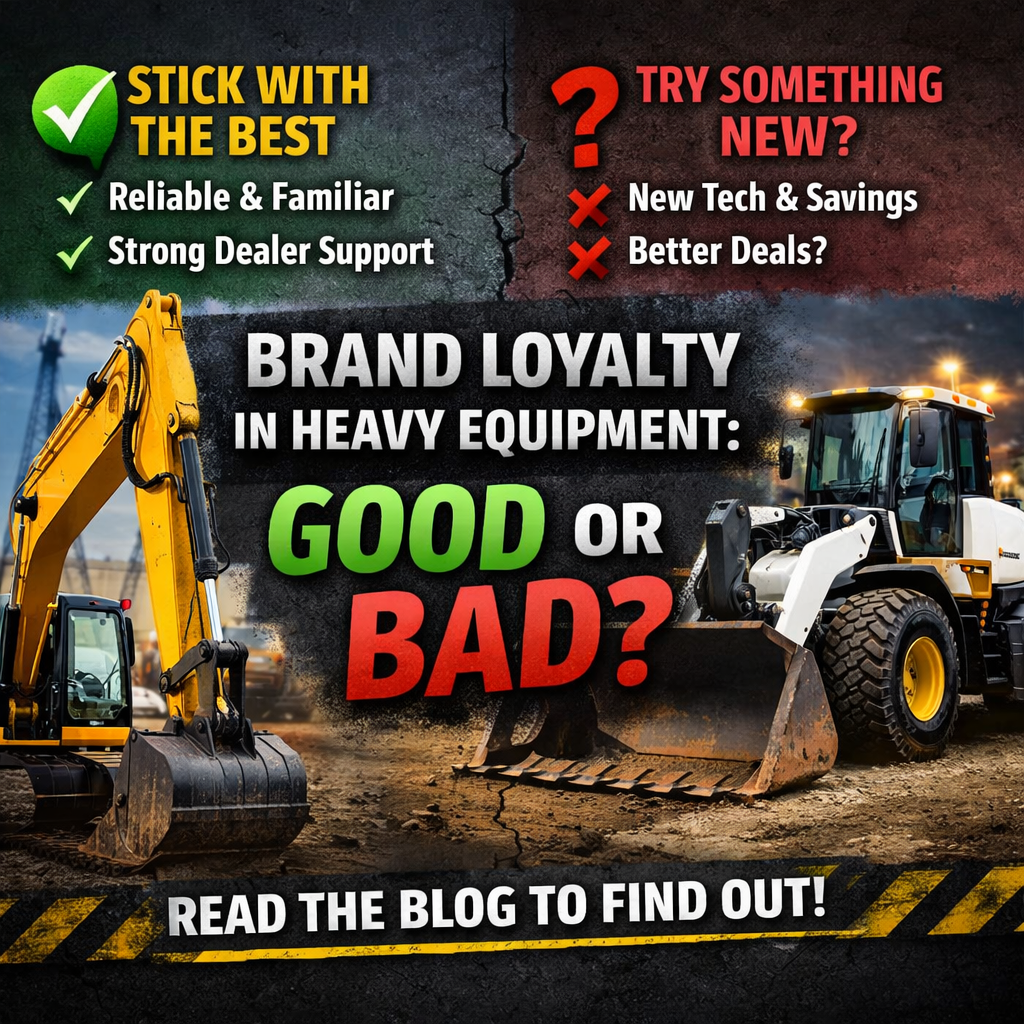
Brand Loyalty in Heavy Equipment: Is It Good or Bad?
In the world of heavy equipment, brand loyalty is more than just a preference — it can shape purchasing decisions, maintenance practices, and even jobsite efficiency. But is brand loyalty truly beneficial, or can it hold contractors and operators back? Let’s dive into why loyalty to certain brands exists in heavy equipment, and whether it’s a good thing for your business.
Why Brand Loyalty Happens in Heavy Equipment
Brand loyalty in heavy equipment often stems from a combination of reliability, familiarity, and trust:
- Reliability and Performance: Contractors stick with brands that consistently deliver durable machines capable of handling tough jobs. If a particular excavator, loader, or dozer has proven its reliability on multiple projects, it’s easy to see why an operator would stick with it.
- Service and Support: Heavy equipment requires maintenance and repairs. A brand with a strong dealer network, fast parts delivery, and knowledgeable service technicians encourages loyalty because downtime is minimized.
- Operator Comfort and Familiarity: Experienced operators often develop a preference for the controls, ergonomics, and feel of a specific brand. This comfort translates into better productivity and fewer mistakes.
- Resale Value: Some brands hold their value better than others. Contractors know that sticking with certain brands can make resale or trade-in easier and more profitable.
The Benefits of Brand Loyalty
Brand loyalty can have significant advantages in heavy equipment:
- Consistency on the Jobsite: Operators who are familiar with a brand can work more efficiently, reducing errors and accidents.
- Simplified Maintenance: Standardizing your fleet with one or two trusted brands can streamline training, parts inventory, and repair processes.
- Better Dealer Relationships: Long-term loyalty often earns better service agreements, discounts, or priority support from dealerships.
The Risks of Blind Loyalty
However, blind loyalty — sticking with a brand without considering alternatives — can be risky:
- Missing Out on Innovation: Competitors may offer newer technology, fuel efficiency, or features that could improve productivity. A loyalist might miss opportunities to upgrade to better machines.
- Overpaying: Sometimes loyalty leads to paying a premium for a brand name instead of evaluating value-for-money options.
- Limited Flexibility: Relying on one brand can leave your operation vulnerable if there’s a recall, shortage of parts, or service disruptions.
Striking the Right Balance
The key is informed loyalty. Appreciate the benefits of brands that have earned your trust through performance and support, but remain open to alternatives that could enhance productivity, reduce costs, or improve safety. Evaluate each purchase on performance, features, cost of ownership, and service availability — not just the logo on the machine.
Final Verdict: Good or Bad?
Brand loyalty in heavy equipment is good when it’s backed by logic and experience. It can improve efficiency, simplify maintenance, and strengthen dealer relationships. But blind loyalty, ignoring better or more innovative options, can be detrimental. Smart operators know that loyalty should always be informed and balanced with market awareness.
After all, in an industry where every machine counts, the right choice matters more than the brand name alone.